Varieties
Traditional vs Pusa Basmati rice: what is the difference?
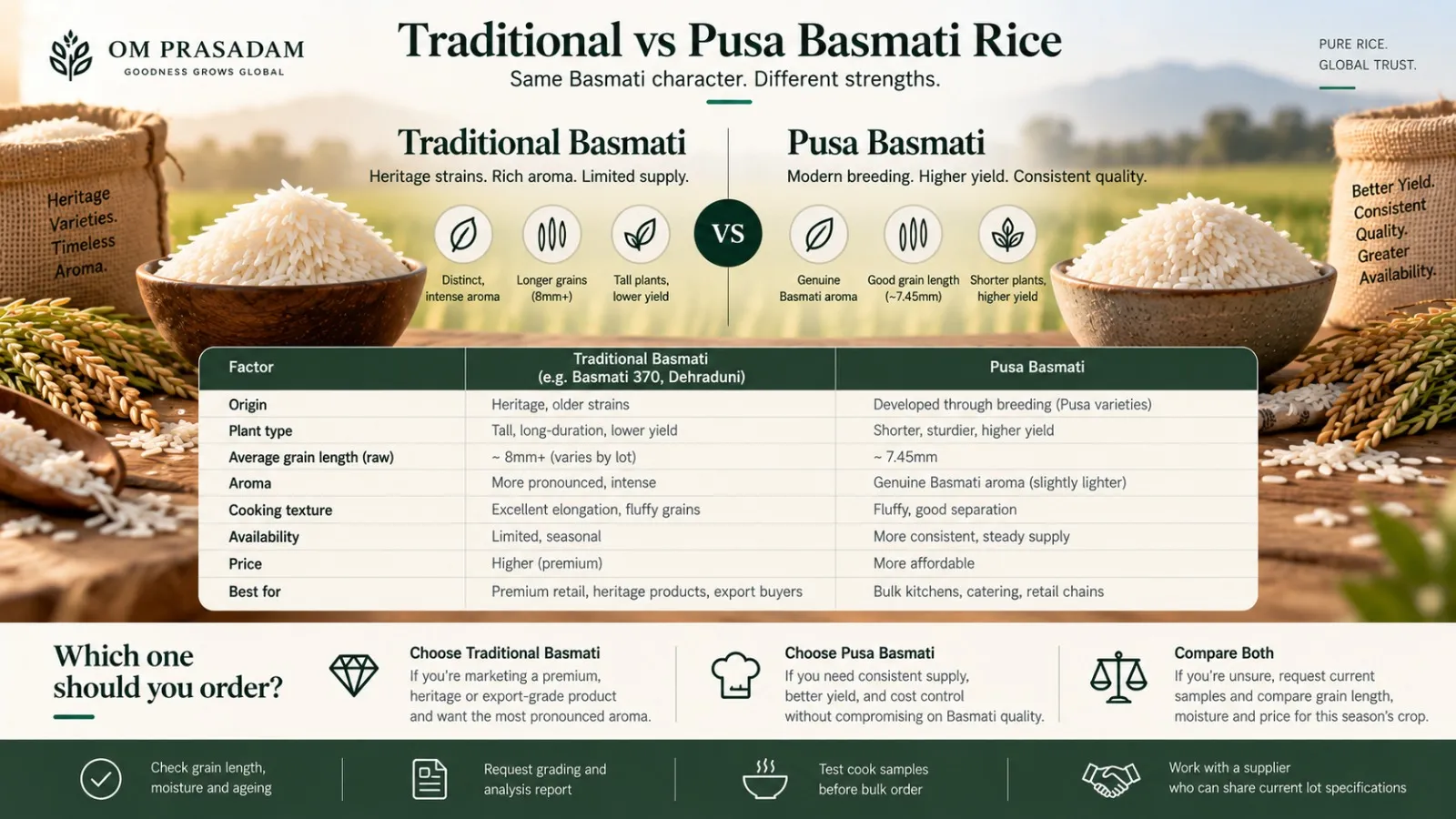
“Traditional Basmati” isn’t a single variety — it’s the older, tall-growing strains like Basmati 370 and Dehraduni Basmati that have been grown in the foothills of the Himalayas for generations, prized for their aroma but low yielding and slow to grow. Pusa Basmati was bred specifically to fix that yield problem while keeping most of what makes Basmati, Basmati. Here’s what actually separates them, and why it matters when you’re placing an order.
Where each one comes from
Traditional varieties are tall, photoperiod-sensitive plants that take a long season to mature and produce comparatively little grain per acre — which is part of why genuinely traditional Basmati is scarce and expensive at scale. Pusa Basmati was developed by crossing traditional Basmati lines with higher-yielding parent varieties, giving growers a shorter, sturdier plant that matures faster and yields significantly more paddy per acre, without losing Basmati’s core aroma and cooking characteristics.
Grain and cooking differences
Traditional Basmati is typically valued for the most pronounced aroma and the longest elongation on cooking, but grain length and consistency can vary more from lot to lot simply because supply is thinner and less standardised. Pusa Basmati runs a touch shorter in average grain length — generally around 7.45mm versus the 8mm-plus you’ll see in premium traditional or 1121-style lots — but it’s more consistent from season to season, cooks up fluffy with good separation, and carries a lighter version of the same aroma rather than a muted or artificial one.
Price and availability
This is usually the deciding factor in a real order. Traditional Basmati commands a premium because low yield keeps supply tight, and it’s often reserved for premium retail packs or buyers explicitly asking for heritage varieties. Pusa Basmati sits at a more accessible price point precisely because higher yields keep it in steadier supply, which is why it’s become one of the workhorse varieties for bulk kitchens, catering, and retail chains that need genuine Basmati at volume without heritage-variety pricing.
So which one should you order?
- Marketing a premium, heritage, or export-grade product where “traditional Basmati” on the label matters to the end buyer → source it specifically and expect to pay for scarcity.
- Running a kitchen, catering operation, or retail SKU where consistent supply and cost control matter more than heritage branding → Pusa Basmati usually gives you 90% of the aroma and elongation at a meaningfully better price and with steadier availability.
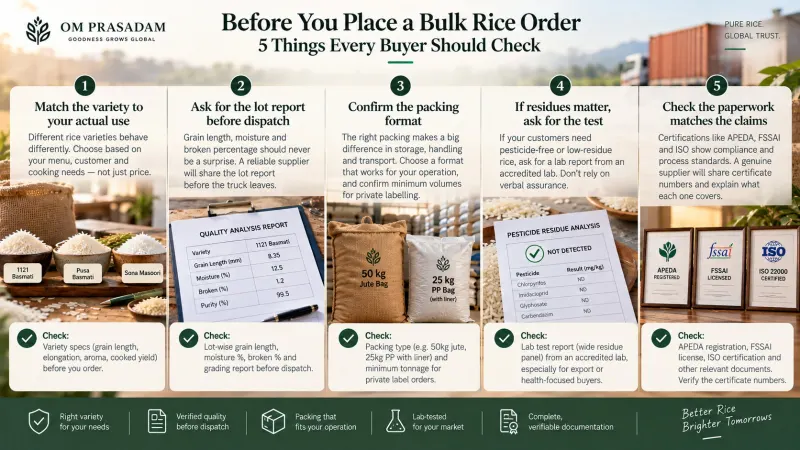
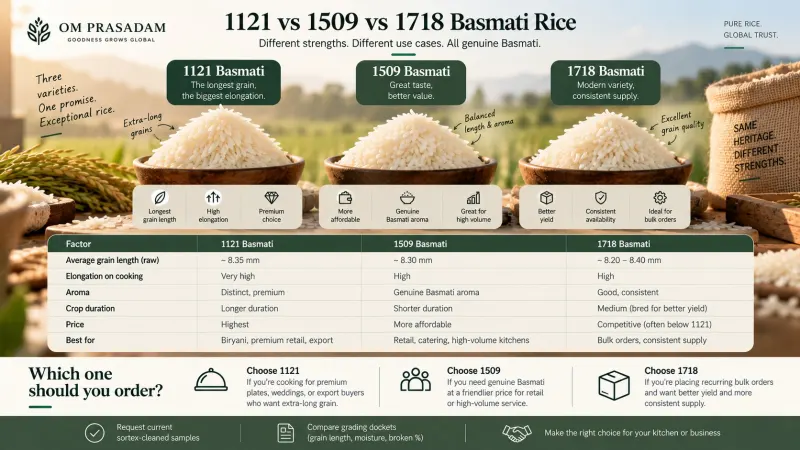
- Not sure which fits your menu or margin → compare Pusa against a longer-grain option like 1121 Basmati side by side on grain length, moisture and price for the current crop year before deciding.
As with any Basmati purchase, the variety name is only the starting point — ask to see the actual lot’s grain length, moisture and ageing before committing to a large order. You can compare current specifications across the full Basmati rice range to see where each variety sits before you request samples.