Varieties
1121 Basmati rice vs 1401 Basmati rice: key differences explained
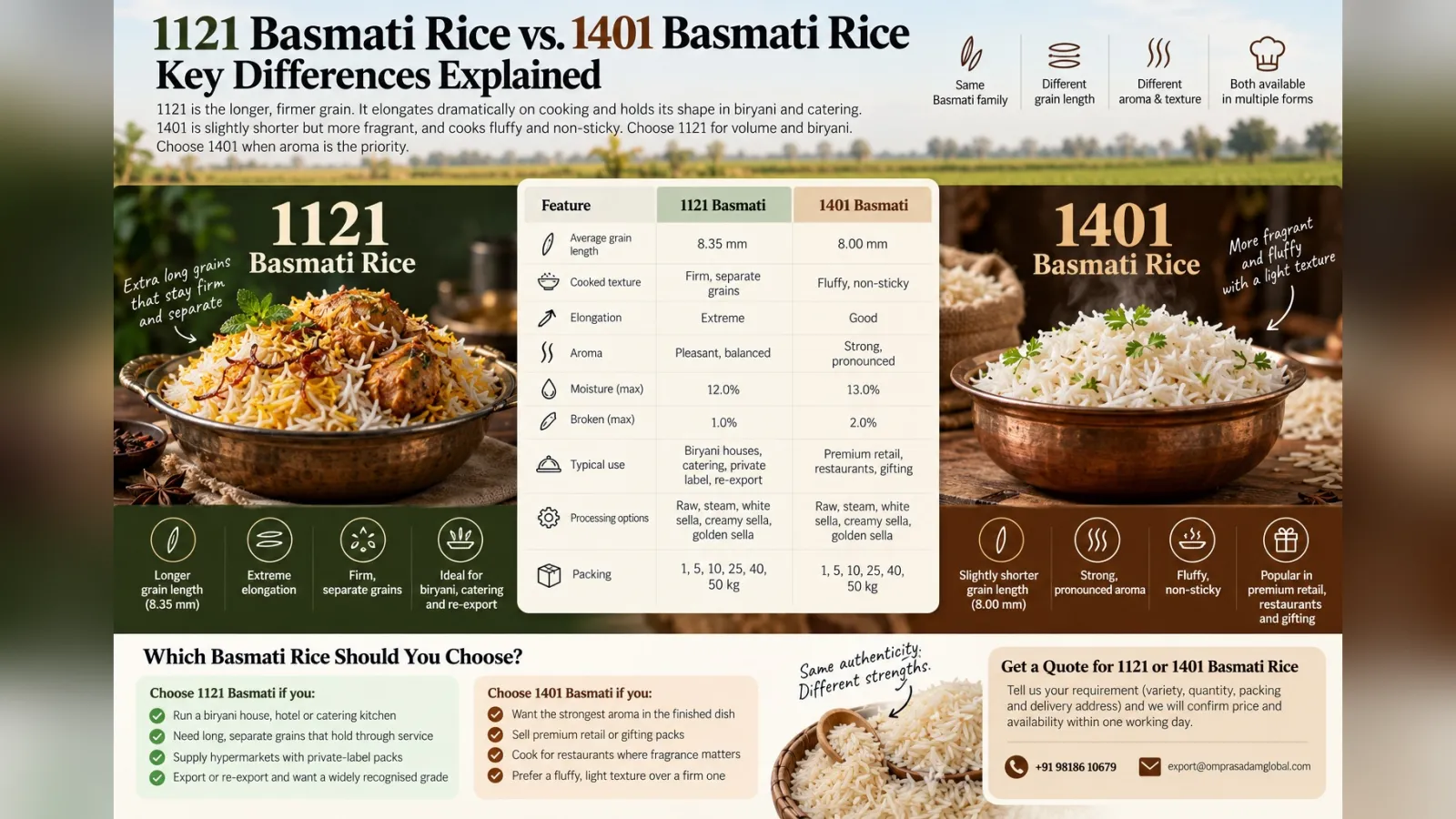
1121 Basmati is the longer, firmer grain. It elongates dramatically on cooking and holds its shape in biryani and catering service. 1401 Basmati is slightly shorter but more fragrant, and cooks fluffy and non-sticky. Choose 1121 for volume, biryani and re-export. Choose 1401 when aroma is the priority, as in premium retail packs, restaurants and gifting.
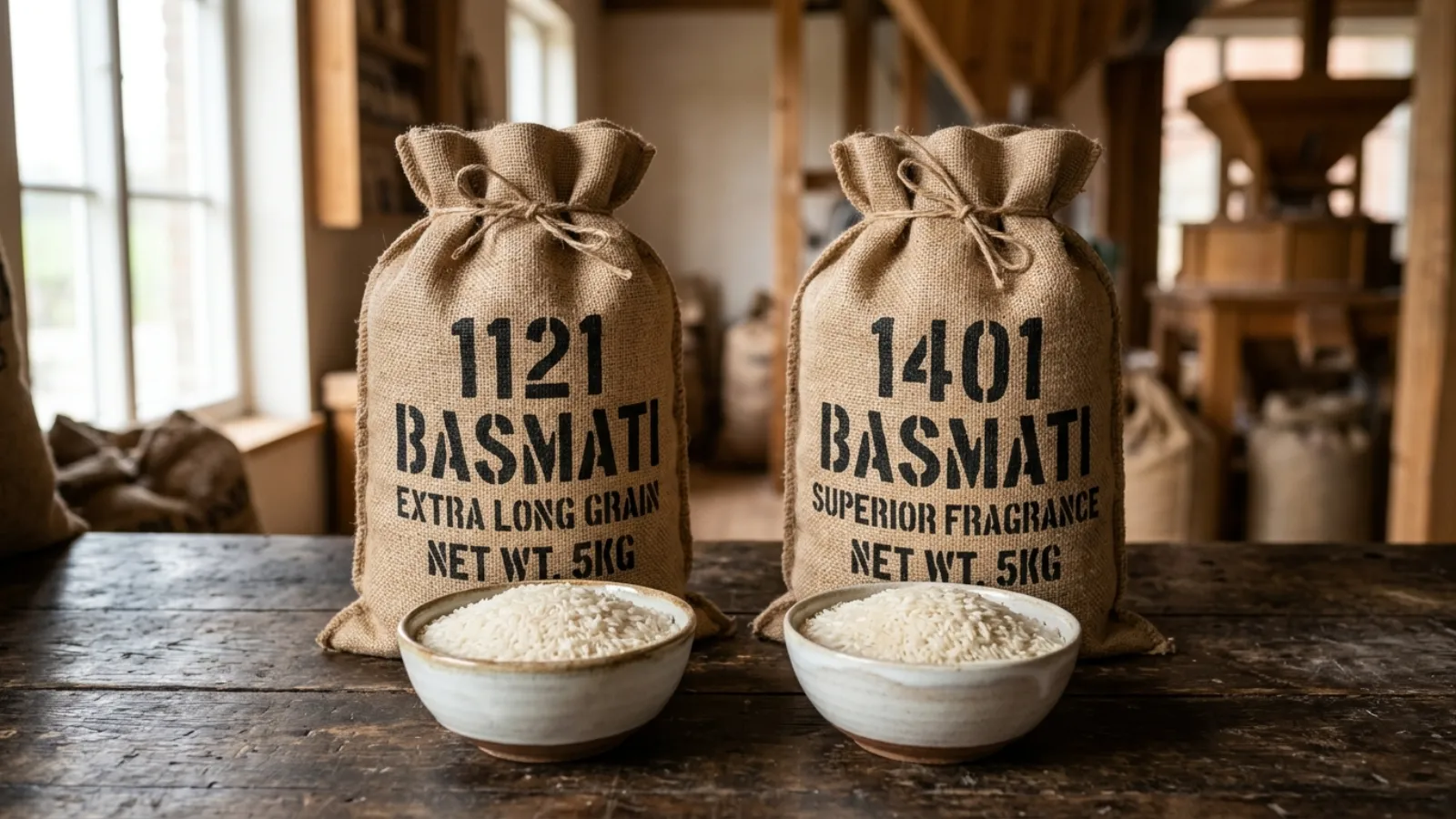
If you buy Basmati rice in bulk or for a busy kitchen, you have probably met both names on a price list. They look similar in the bag, yet they behave differently in the pot and in the market. Here is a plain comparison, built on the numbers we record at our Karnal mill.
What is 1121 Basmati rice?
1121 is the longest-grain commercial Basmati. At an average of 8.35 mm raw, it is the benchmark for length, and it is the volume leader into the Gulf. Cooked grains stretch far beyond their raw size, stay firm and separate, and resist breaking when stirred or held warm.
That firmness is why professional kitchens favour it. A biryani house or caterer needs rice that looks the same at the first plate and the hundredth. You can see our full range of this grade on the 1121 Basmati rice page.
What is 1401 Basmati rice?
1401 is a well-balanced Basmati with strong aroma and a fluffy, non-sticky cook. Its average grain length is 8.00 mm, so it is a little shorter than 1121. What it offers instead is a more pronounced fragrance in the finished dish.
Buyers who judge rice by the smell that fills the kitchen often prefer it. That is why it sells well in premium retail, restaurants and gift packs. Full specifications are on our 1401 Basmati rice page.
1121 vs 1401 Basmati: side-by-side comparison
| Feature | 1121 Basmati | 1401 Basmati |
|---|---|---|
| Average grain length | 8.35 mm | 8.00 mm |
| Cooked texture | Firm, separate grains | Fluffy, non-sticky |
| Elongation | Extreme | Good |
| Aroma | Pleasant, balanced | Strong, pronounced |
| Moisture (max) | 12.0% | 13.0% |
| Broken (max) | 1.0% | 2.0% |
| Typical use | Biryani houses, catering, private label, re-export | Premium retail, restaurants, gifting |
| Processing options | Raw, steam, white sella, creamy sella, golden sella | Raw, steam, white sella, creamy sella, golden sella |
| Packing | 1, 5, 10, 25, 40, 50 kg | 1, 5, 10, 25, 40, 50 kg |
These are typical trade specifications for the current crop year. The analysis report that ships with each lot is the binding one.
Key differences explained
1. Grain length and elongation
The 0.35 mm gap in average length looks small, but it shows up on the plate. 1121 gives the longest cooked grain of any commercial Basmati, which suits dishes where presentation matters. 1401 still cooks into long, slender grains, just not quite as dramatic.
2. Aroma
This is where 1401 pulls ahead. If the fragrance of the rice is the point of the dish, such as a simple pulao or plain steamed rice, 1401 delivers more. 1121 has a clean Basmati aroma, but its strength is structure rather than scent.
3. Cooking behaviour
1121 stays firm and separate, even through long cooking and holding. 1401 turns out soft and fluffy without clumping. Neither is better in the abstract. It depends on whether you need rice that survives a steam table or rice that feels light on the tongue.
4. Tighter specification on 1121
Our typical 1121 lots run at 12.0% maximum moisture and 1.0% maximum broken. 1401 runs at 13.0% and 2.0%. For buyers with strict grade tolerances, such as private-label programmes and re-exporters, the tighter 1121 numbers matter.
5. Market role
1121 is the volume variety in the Gulf trade. 1401 is more of a quality-led choice, favoured where buyers want a distinctive aroma to be part of the product story.
Which Basmati rice should you choose?
Choose 1121 Basmati if you:
- Run a biryani house, hotel or catering kitchen
- Need long, separate grains that hold through service
- Supply hypermarkets with private-label packs
- Export or re-export and want the most widely recognised grade
Choose 1401 Basmati if you:
- Want the strongest aroma in the finished dish
- Sell premium retail or gifting packs
- Cook for restaurants where fragrance is part of the experience
- Prefer a fluffy, light texture over a firm one
Not sure? Order a small sample of each and cook them the way you normally would. Your own pot is the best test. Our guide to 1121 vs 1509 vs 1718 Basmati is also worth a read if you are comparing more than two varieties.
What is sella (parboiled) Basmati?
Both varieties come in sella forms: white, creamy and golden. Sella rice is parboiled before milling, which makes the grain harder, less likely to break and more forgiving in large-batch cooking. Many caterers prefer sella because yields stay consistent. Golden sella is the most popular for biryani.
How we mill and check both varieties
Both grades are processed the same way at our mill:
- Intake checks: every truck is tested for moisture and admixture before unloading.
- Ageing: Basmati paddy is stored for a minimum of twelve months, which is what gives the grain its elongation on cooking.
- Sortex sorting: two passes remove discoloured, chalky and immature grains.
- Lot analysis: grain length, broken percentage, moisture and purity are recorded per lot and travel with your consignment.
We hold APEDA registration, an FSSAI licence and ISO 22000:2018 certification.
Frequently asked questions
What is the main difference between 1121 and 1401 Basmati rice?
1121 has a longer grain (8.35 mm vs 8.00 mm) and cooks firm and separate. 1401 has a stronger aroma and cooks fluffy and non-sticky.
Which is better for biryani, 1121 or 1401?
1121 is the usual choice for biryani because its long, firm grains stay intact during layering and dum cooking. 1401 works well when you want more fragrance and a softer bite.
Is 1401 Basmati rice more aromatic than 1121?
Yes. 1401 is known for a pronounced aroma, while 1121 is valued more for length and structure.
Can I buy both varieties in small packs?
Yes. Both are available in 1, 5, 10, 25, 40 and 50 kg packs. Households can order a single pack with no minimum, and trade orders start at one tonne of a single variety.
Do both varieties come in parboiled form?
Yes. Both are available as raw, steam, white sella, creamy sella and golden sella.
Get a quote for 1121 or 1401 Basmati rice
Rice rates move with the mandi, so we quote against your actual requirement: variety, quantity, packing and delivery address. Tell us what you need and we will confirm price and availability within one working day.
Call +91 98186 10679 or email export@omprasadamglobal.com.