Processing
Raw, steamed and sella rice: what’s the difference and which should you buy?
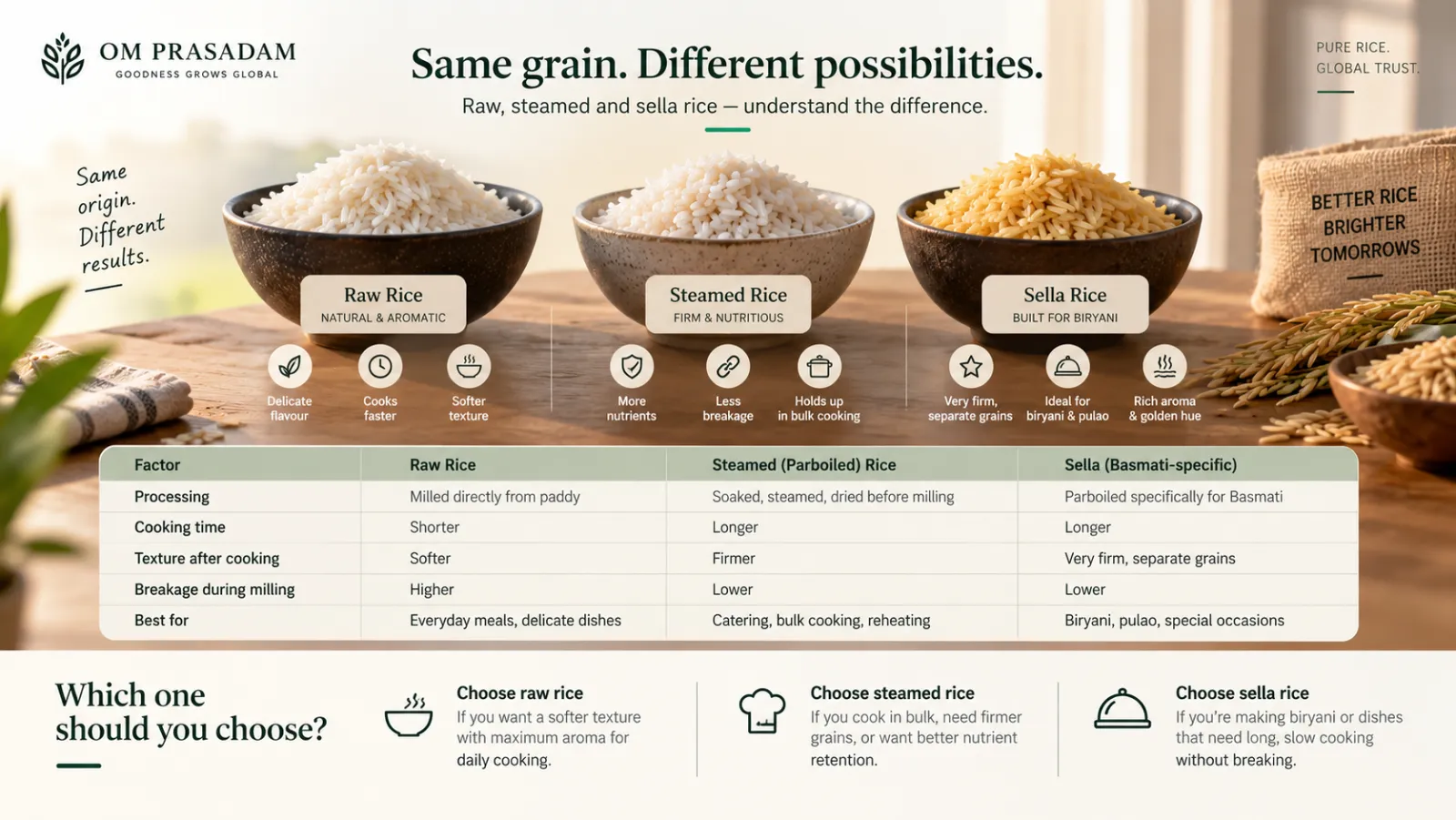
If you’ve browsed a rice supplier’s catalogue, you’ve probably noticed the same variety listed multiple times — “1121 Basmati Raw,” “1121 Basmati Steam,” “1121 Basmati Golden Sella” — all from the same grain, but priced and described differently. This isn’t three different rices. It’s the same paddy processed three different ways, and the processing method changes how the rice looks, cooks, and performs in the pot. Here’s what each one actually means.
Raw rice: minimally processed, closest to natural
Raw rice is milled directly from paddy without any pre-cooking or steam treatment. The paddy is dehusked, polished, and graded — but the grain itself hasn’t been altered beyond that.
What this means for you:
- Cooks relatively quickly compared to parboiled rice
- Has a softer texture once cooked
- Retains a more delicate flavor and aroma, particularly important for aromatic Basmati varieties
- Slightly more prone to breaking during milling and cooking compared to parboiled rice
Raw rice is the standard choice for everyday cooking, and it’s what most households default to unless they have a specific reason to choose otherwise.
Steamed (parboiled) rice: processed before milling
Steamed rice — also called parboiled rice — goes through an additional step before milling: the paddy is soaked, steamed, and then dried before the husk is removed. This partial cooking process pushes nutrients from the outer bran layer into the grain itself and changes the starch structure.
What this means for you:
- Grains become firmer and more resistant to breaking during milling and cooking
- Takes slightly longer to cook than raw rice
- Cooked texture is firmer, with grains staying more separate and less sticky
- Retains more of the natural nutrients that are otherwise lost with the bran during regular milling
Parboiled rice is widely preferred by canteens, caterers, and high-volume kitchens because it holds up well to reheating and large-batch cooking without turning mushy. It’s a big part of why IR 64 parboiled is such a popular Non-Basmati choice for institutional buyers.
Sella rice: a specific type of parboiling for Basmati
Sella is a term specific to parboiled Basmati rice, and it comes in a few variations:
- White sella — lightly parboiled, closer in appearance to raw rice but with the firmness benefits of parboiling
- Creamy sella — a more traditional parboiling process resulting in a slightly creamier grain color
- Golden sella — parboiled using a process that gives the grain a distinct golden hue, often considered the most traditional and aromatic form of parboiled Basmati
Golden sella, in particular, is a favorite for biryani because the grains become exceptionally firm and separate after cooking, holding their shape through the slow, layered cooking process biryani requires without turning sticky or breaking apart. You can see the full range — 1121 Golden Sella included — on our Basmati rice range page, along with grain length and moisture specifications for each form.
Side-by-side comparison
| Factor | Raw rice | Steamed (parboiled) | Sella (Basmati-specific) |
|---|---|---|---|
| Processing | Milled directly from paddy | Soaked, steamed, dried before milling | Parboiled specifically for Basmati |
| Cooking time | Shorter | Longer | Longer |
| Texture after cooking | Softer | Firmer | Very firm, separate grains |
| Breakage during milling | Higher | Lower | Lower |
| Best for | Everyday meals, delicate dishes | Catering, bulk cooking, reheating | Biryani, pulao, special occasions |
So which one should you choose?
Pick raw rice if you’re cooking small daily batches and want a softer texture with maximum aroma — this applies to both Basmati and Non-Basmati.
Pick steamed (parboiled) rice if you’re running a kitchen that cooks in bulk, needs the rice to hold up through reheating, or wants a firmer, more separate grain for dishes like pulao or mixed rice preparations. This is especially relevant for Non-Basmati varieties like IR 64 and other Non-Basmati rice used in high-volume settings.
Pick sella (especially golden sella) specifically for biryani or any dish where the rice needs to survive long, slow cooking without breaking down — it’s built for exactly that.
There’s no universally “better” option here — raw, steamed, and sella all serve different cooking needs, and many kitchens keep more than one on hand depending on what’s being cooked that day.