Varieties
Sharbati rice: an underrated everyday staple
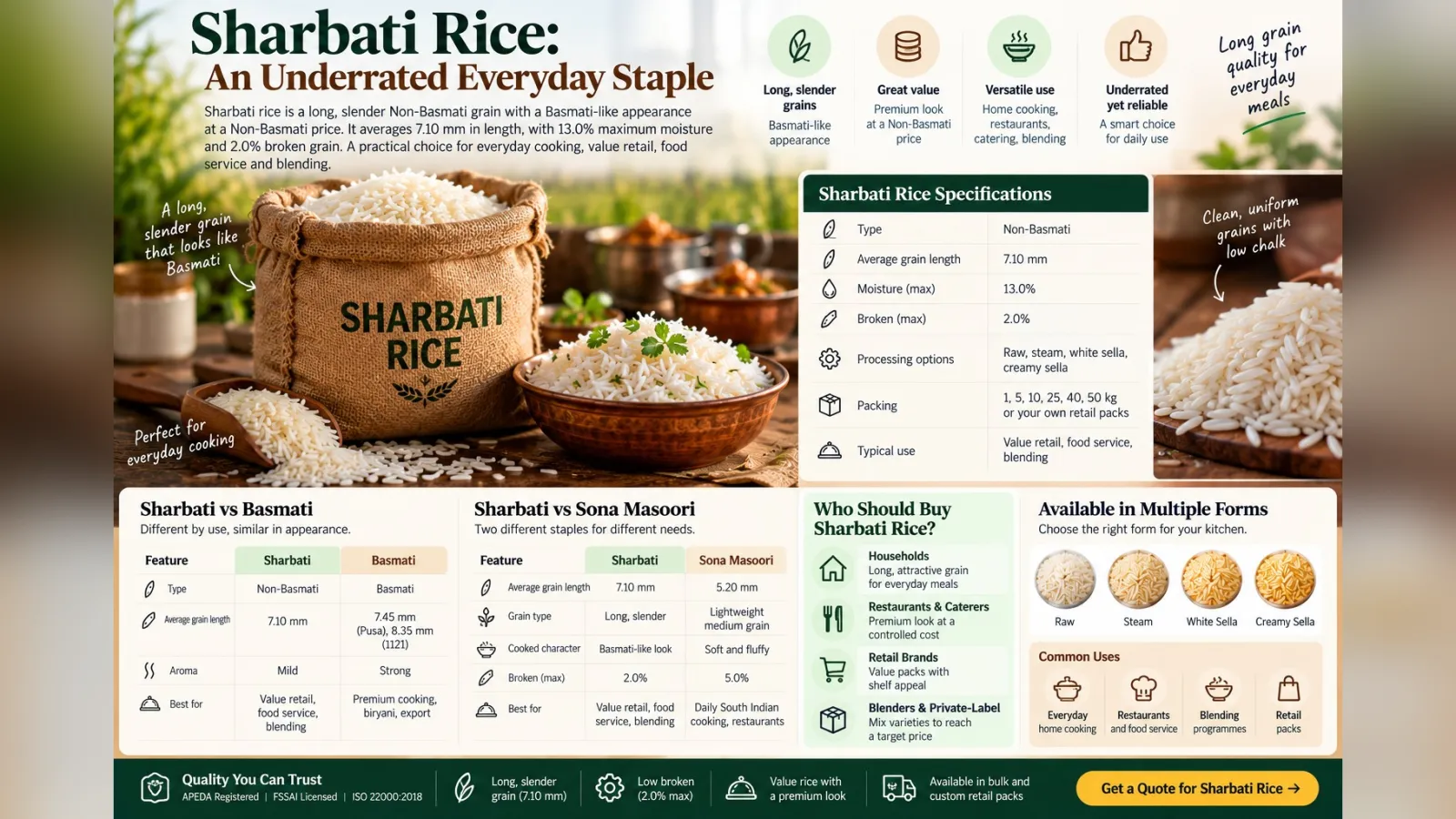
Sharbati rice is a long, slender Non-Basmati grain with a Basmati-like appearance at a Non-Basmati price. It averages 7.10 mm in length, with a maximum of 13.0% moisture and 2.0% broken grain. It suits value retail, food service and blending, which makes it a practical choice for everyday cooking when you want a long-grain look without paying Basmati rates.
Ask most buyers to name an everyday rice and they say Basmati for special meals and Sona Masoori for daily use. Sharbati rarely comes up. Yet it fills a useful gap: a long, elegant grain priced for regular kitchens. This guide explains what Sharbati is, how it compares with other varieties and who should be buying it.
What is Sharbati rice?
Sharbati is a Non-Basmati rice milled as a long, slender grain. It looks like Basmati in the bag and on the plate, but it is priced as a Non-Basmati variety. That combination is its whole appeal.
At 7.10 mm on average, it sits in the long-grain range. For context, Pusa Basmati averages 7.45 mm, and the longest commercial Basmati, 1121, averages 8.35 mm. Sharbati is not a replacement for either, but visually it comes close, which is why buyers use it where appearance matters more than the Basmati name. You can read the full specification on our Sharbati rice page.
Sharbati rice specifications
| Feature | Sharbati rice |
|---|---|
| Type | Non-Basmati |
| Average grain length | 7.10 mm |
| Moisture (max) | 13.0% |
| Broken (max) | 2.0% |
| Processing options | Raw, steam, white sella, creamy sella |
| Packing | 1, 5, 10, 25, 40, 50 kg or your own retail packs |
| Typical use | Value retail, food service, blending |
These are typical trade specifications for the current crop year. The analysis report that ships with each lot is the binding one.
One detail stands out. Sharbati carries a 2.0% maximum broken limit and 13.0% maximum moisture, which are tighter than Sona Masoori (5.0% broken, 13.5% moisture). A lower broken percentage means more whole grains on the plate, which matters for presentation.
Why Sharbati is underrated
1. It looks premium without a premium price
Long, slender grains signal quality. Sharbati gives restaurants, caterers and retail brands that look at a lower cost per kilo than Basmati. For a canteen serving hundreds of plates a day, the saving adds up.
2. Tight grade tolerances
Many value rice varieties run at 5.0% broken. Sharbati's 2.0% limit puts it in line with several Basmati grades, so kitchens get a cleaner, more uniform result.
3. Flexible processing
Sharbati comes in raw, steam, white sella and creamy sella forms. Raw and steam suit everyday home cooking and retail. Sella rice is parboiled before milling, which makes the grain harder and less likely to break, a plus for large-batch cooking.
4. Works in blends
Because of its length and appearance, Sharbati is commonly used in blending programmes, where buyers combine varieties to hit a target price and look.
Sharbati vs Basmati: what is the difference?
Basmati is prized for its length, aroma and dramatic elongation on cooking. Sharbati is valued for its appearance and price. If you need the unmistakable aroma and extreme length of a premium Basmati, such as for biryani service, choose Basmati. If you need a long-grain rice that looks good and keeps costs under control, Sharbati is the sensible pick.
Sharbati vs Sona Masoori: which should you buy?
Both are Non-Basmati staples, but they serve different kitchens.
| Feature | Sharbati | Sona Masoori |
|---|---|---|
| Average grain length | 7.10 mm | 5.20 mm |
| Grain type | Long, slender | Lightweight medium grain |
| Cooked character | Basmati-like look | Soft and fluffy |
| Broken (max) | 2.0% | 5.0% |
| Best for | Value retail, food service, blending | Daily South Indian cooking, restaurants, retail packs |
Choose Sona Masoori for soft, fluffy rice in the South Indian style. Choose Sharbati when you want a long-grain look at a value price. Learn more on our Sona Masoori rice page.
Who should buy Sharbati rice?
- Households: families who cook rice daily and want a long, attractive grain without Basmati pricing
- Restaurants and caterers: kitchens that want a premium look at a controlled cost
- Retail brands: value packs that need shelf appeal
- Blenders and private-label buyers: programmes that mix varieties to reach a target price
If you are comparing several Non-Basmati options, browse our full Non-Basmati rice range, which covers Sona Masoori, IR 64, Sugandha, PR 11 and Parmal alongside Sharbati.
Tips for buying Sharbati rice in bulk
A few checks make the first order smoother:
- Match the processing to the use. Raw or steam for retail and daily cooking, sella for large-batch kitchens.
- State your broken limit. If you need a tighter figure than 2.0%, tell us the specification and we will confirm whether we can mill to it.
- Ask for the lot report. Grain length, broken percentage and moisture should match what you were quoted.
- Sample first. Cook a small batch the way your kitchen normally does before placing a larger order.
How we check quality before dispatch
- Intake checks: every truck is tested for moisture and admixture before unloading.
- Sortex sorting: two passes remove discoloured, chalky and immature grains.
- Lot analysis: grain length, broken percentage, moisture and purity are recorded per lot and travel with your consignment.
- Sealed packing: food-grade bags with inner liners, stitched and marked with batch and lot number for traceability.
We hold APEDA registration, an FSSAI licence and ISO 22000:2018 certification.
Frequently asked questions
What is Sharbati rice?
Sharbati is a Non-Basmati rice with a long, slender grain and a Basmati-like appearance at a Non-Basmati price. It averages 7.10 mm in length.
Is Sharbati rice the same as Basmati?
No. Sharbati is a Non-Basmati variety. It resembles Basmati visually, but it is shorter than premium Basmati grades and is priced lower.
What is Sharbati rice used for?
It is used for value retail packs, food service and blending programmes.
Is Sharbati rice available in small packs?
Yes. It comes in 1, 5, 10, 25, 40 and 50 kg packs. Households can order a single pack with no minimum, and trade orders start at one tonne of a single variety.
Does Sharbati come as parboiled rice?
Yes. Besides raw and steam, it is available as white sella and creamy sella.
Get a quote for Sharbati rice
Rice rates move with the mandi, so we quote against your actual requirement: variety, quantity, packing and delivery address. Tell us what you need and we will confirm price and availability within one working day.
Call +91 98186 10679 or email export@omprasadamglobal.com.